

How voice ordering, robot kitchens, smart shelves, and predictive analytics are reshaping the way Americans eat and shop
Introduction
Artificial intelligence is no longer a futuristic add-on in the American food industry. It is in the drive-thru speaker, the inventory system, the shelf-edge price tag, and the app that recommends what to put in your cart. For restaurants and grocers operating on thin margins, often in the low single digits, AI offers a way to cut costs, reduce waste, and serve customers faster.
But adoption has not been smooth. High-profile pilots have been scaled back, shoppers have pushed back on pricing technology, and workers worry about what automation means for their jobs. This article looks at where AI is being used, what is working, what is not, and what comes next.
Why Food Retail and Restaurants Are Turning to AI
Several pressures are pushing the industry toward automation:
- Thin margins. Both restaurants and supermarkets have long operated on small profit percentages, so even modest efficiency gains matter.
- Labor challenges. Hiring and retention difficulties and rising wages have made automation more attractive.
- Higher input costs. Inflation in food, rent, and energy has forced operators to find savings elsewhere.
- Changing customer expectations. Shoppers and diners expect speed, personalization, and seamless digital ordering.
- Data abundance. Loyalty programs, mobile apps, and point-of-sale systems generate the data that AI models need.
AI in Restaurants
Voice AI at the Drive-Thru
Drive-thru ordering is the most visible AI experiment in restaurants. Chains including Wendy’s, Taco Bell, White Castle, and Checkers have tested or rolled out conversational voice assistants that take orders, suggest add-ons, and send them to the kitchen.
Results have been mixed. McDonald’s ended its widely publicized test with IBM in 2024 after reports of order mix-ups, while other chains have continued expanding their programs. The lesson is that noisy environments, accents, background chatter, and complicated custom orders remain hard problems, and success depends heavily on the quality of the technology and how well staff are trained to work alongside it.
Robotics and Kitchen Automation
Kitchen robots are moving from novelty to practical tool. Examples include:
- Fry and grill robots, such as those from Miso Robotics, that handle repetitive, hot, or hazardous tasks.
- Automated bowl-assembly lines, like Sweetgreen’s Infinite Kitchen, designed to speed up assembly and improve consistency.
- Prep automation, including avocado-processing and dough-handling machines at large chains.
The pitch is consistency, safety, and relief from the toughest kitchen jobs. The challenge is the upfront capital cost and the need for physical space and maintenance, which makes these tools a better fit for large chains than independent restaurants.
Smarter Demand Forecasting and Inventory
Behind the scenes, AI forecasting tools predict how many customers will arrive and what they will order, based on weather, local events, seasonality, and past sales. This helps managers:
- Order the right amount of ingredients
- Schedule the right number of staff
- Cut spoilage and over-prepping
- Reduce stockouts of popular items
Food waste tools that use cameras and scales to track what gets thrown away have helped some kitchens reduce waste and save money while meeting sustainability goals.
Personalization and Marketing
Restaurant apps increasingly use machine learning to recommend dishes, time promotions, and tailor loyalty rewards. Digital menu boards can adjust to show weather-appropriate items or highlight products that are in stock and quick to make. Done well, this raises average order value and brings customers back.
Online Ordering, Delivery, and Ghost Kitchens
AI also powers routing and delivery-time predictions on platforms like DoorDash and Uber Eats. It supports virtual brands and “ghost kitchens” that operate only for delivery, using data to decide which menu concepts will sell in which neighborhoods.
AI in Grocery Stores
Inventory Management and Shelf Monitoring
Grocers manage tens of thousands of products with short shelf lives. AI-powered systems now help forecast demand for fresh items, automate reordering, and flag likely out-of-stocks. Some stores have used shelf-scanning robots and cameras to spot empty shelves, misplaced items, and pricing errors, then alert employees to fix them.
Fresh Food and Waste Reduction
Produce, meat, and bakery items are among the biggest sources of shrink. Tools that fine-tune ordering and markdown timing can reduce waste while protecting margins. Better forecasting also helps ensure customers find fresh products when they want them.
Checkout Technology
Grocery checkout has been a testing ground for automation, with mixed results:
- Self-checkout is common but has faced criticism over theft, frustrating user experiences, and customer preference for human cashiers. Some retailers have scaled it back or adjusted it.
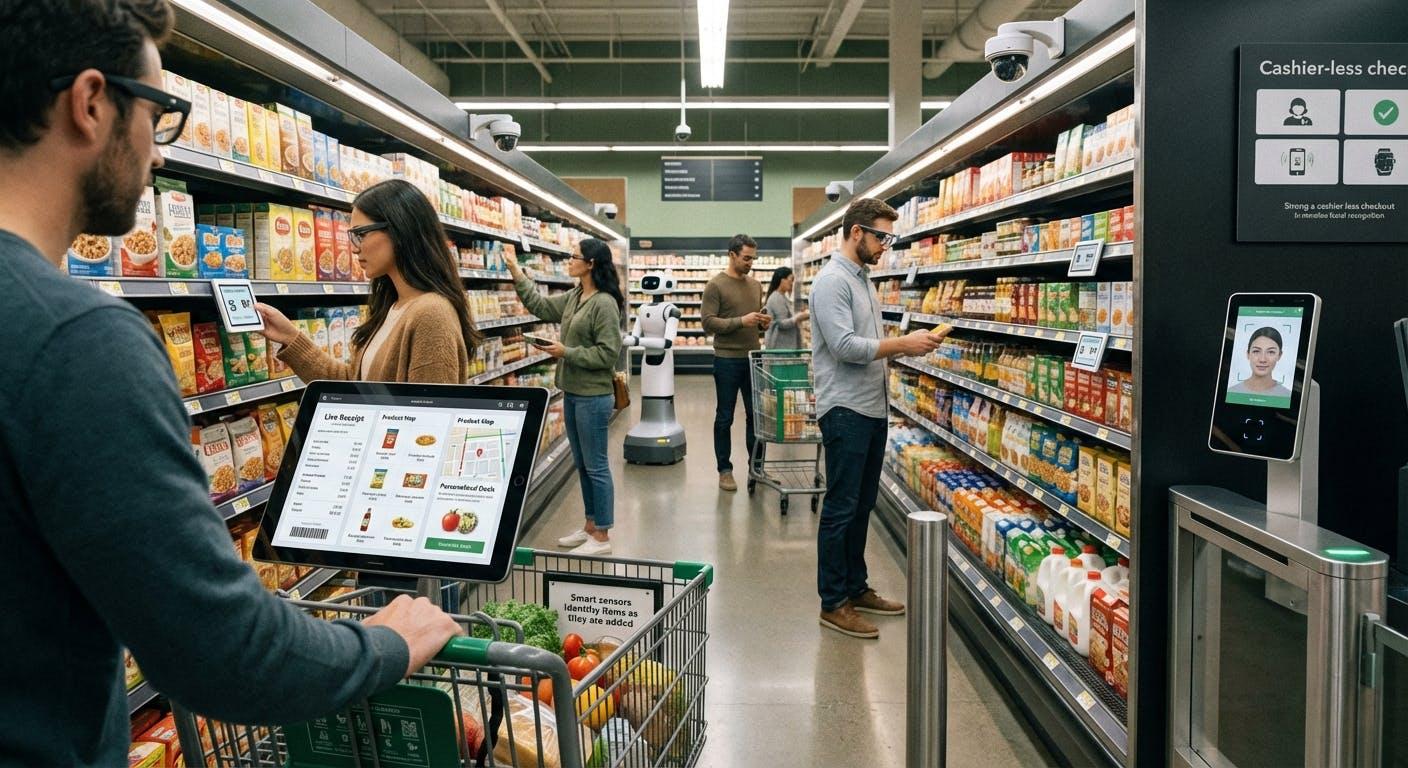
- Frictionless “grab and go” technology, like Amazon’s Just Walk Out, works well in controlled settings such as stadiums and airports, but Amazon moved away from it in its Fresh grocery stores in favor of smart carts.
- Smart carts with built-in scanners and screens let shoppers scan as they go and skip the checkout line.
- AI-based theft detection uses cameras to spot unscanned items, raising both loss-prevention benefits and privacy questions.
E-Commerce, Substitutions, and Personalization
For online grocery, AI helps with search, recommendations, substitution suggestions when an item is out of stock, and picking routes for in-store shoppers. Retail giants like Walmart and Kroger, along with partners such as Instacart, have invested heavily in AI-driven personalization and conversational shopping assistants that can build a cart from a recipe or a list.
Supply Chain and Logistics
Behind the scenes, AI optimizes warehouse operations, delivery routes, and cold-chain monitoring. Better visibility into supply chains helps retailers respond faster to disruptions, from weather events to supplier shortages.
The Controversies and Challenges
Dynamic and Personalized Pricing
Electronic shelf labels and algorithmic pricing have raised concerns that prices could change by time of day, demand, or even the individual shopper. The idea drew backlash and attention from lawmakers, including a 2024 letter from U.S. senators to Kroger about its shelf-label plans. Companies argue the technology mainly improves accuracy and efficiency, but trust is fragile, especially when household budgets are tight.
Jobs and Workforce Impact
Automation raises a real question about the future of frontline work. Supporters say AI can take over repetitive tasks and let employees focus on hospitality and service. Critics worry about fewer hours and fewer entry-level roles. In practice, many early deployments shift tasks rather than eliminate jobs outright, but long-term effects remain uncertain.
Privacy and Data Security
Loyalty programs, cameras, and voice recordings collect large amounts of personal data. Questions about how long it is stored, who can access it, and whether it is sold to third parties are growing, and state privacy laws, such as those in California, add compliance requirements.
Accuracy, Bias, and Customer Frustration
AI errors, such as misheard orders or incorrect substitutions, can quickly turn into viral social media complaints. Systems must also work for people with different accents, speech patterns, and accessibility needs.
Cost and Uneven Access
Large chains can afford custom AI systems and robotics, while independent restaurants and small grocers often cannot. This risks widening the gap between big and small operators, though affordable software tools, such as AI-based scheduling and inventory apps, are starting to close it.
What Consumers Should Expect
For diners and shoppers, the near-term changes will likely include:
- More conversational ordering at drive-thrus and in apps
- Highly personalized deals and recommendations
- More digital price tags and promotions that update in real time
- Faster, more consistent service in large chains
- Continued debate over when a human touch is worth the cost
The Road Ahead
Several trends are likely to define the next few years:
- Generative AI assistants that plan meals, build shopping lists, and handle customer service.
- Hybrid models that pair AI with human staff rather than replacing them entirely.
- Smarter sustainability tools to cut food waste and track supply chain emissions.
- Tighter regulation around pricing transparency, data privacy, and surveillance.
- Selective automation, in which companies keep tools that clearly pay off and drop those that frustrate customers.
Conclusion
AI is transforming America’s restaurants and grocery stores, but not in a straight line. The winners will likely be the businesses that use the technology to solve real problems, such as reducing waste, speeding up service, and improving availability, while being transparent about pricing and data and keeping the human experience at the center. For customers, the best outcome is a food system that is faster, fresher, and more affordable without feeling more impersonal.