

Why restaurant operators should pay attention to the new “destination grocery” model—and what it reveals about where diners are heading next.
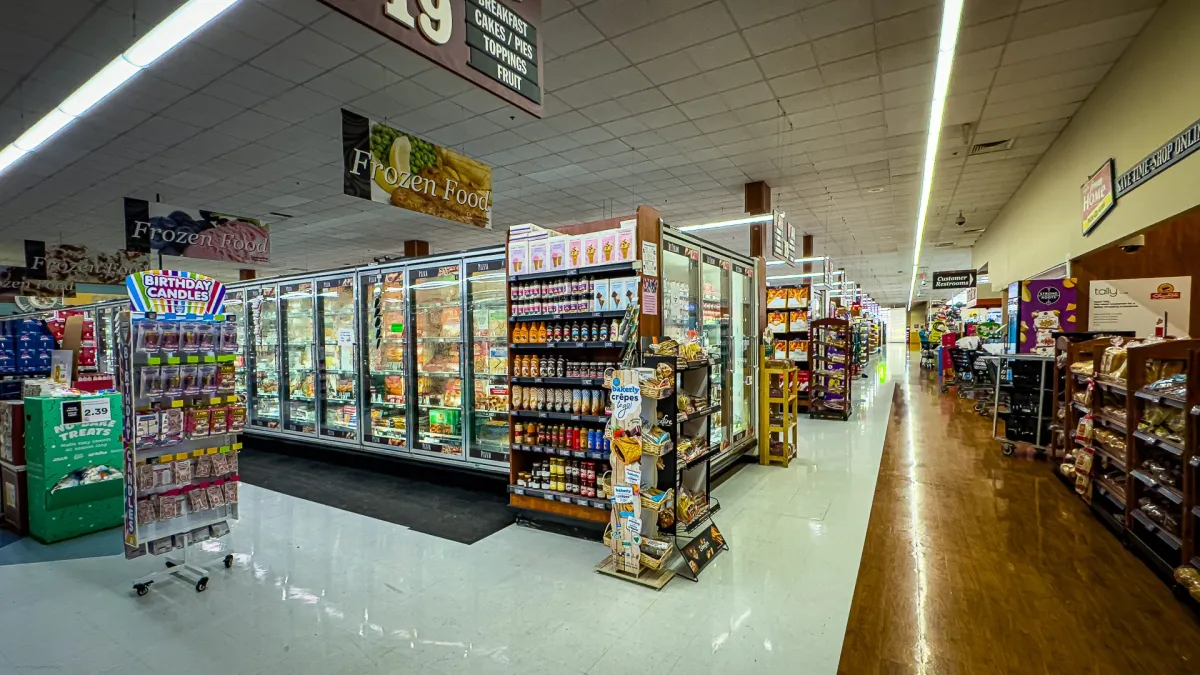
Restaurant owners have been told for years to worry about delivery apps, ghost kitchens, social media algorithms, rising labor costs, and cheaper fast-casual chains.
All true.
But one of the more dangerous competitors is sitting in plain sight: the physical grocery store.
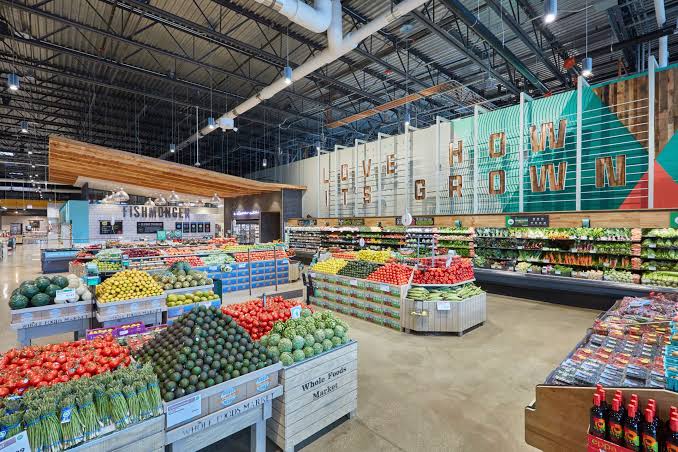
Not the old version with fluorescent lighting, tired deli counters, and a few sad rotisserie chickens under heat lamps. That version is fading. The newer grocery store is becoming something else entirely: a lunch stop, a dinner shortcut, a coffee shop, a wine bar, a prepared-meal hub, a community errand, a health destination, and sometimes a better-value alternative to casual dining.
That should get every restaurant operator’s attention.
Because the grocery store is not trying to beat restaurants by becoming a better restaurant. It is competing in a smarter, more uncomfortable way: by solving the diner’s problem before they decide to dine out.
Physical grocery is still deeply relevant. FMI’s 2026 grocery shopper research reports that 54% of shoppers always shop in-store at their primary grocery store, with another 20% mostly shopping in-store. That means the store visit is not dead—it is still a major weekly consumer habit.
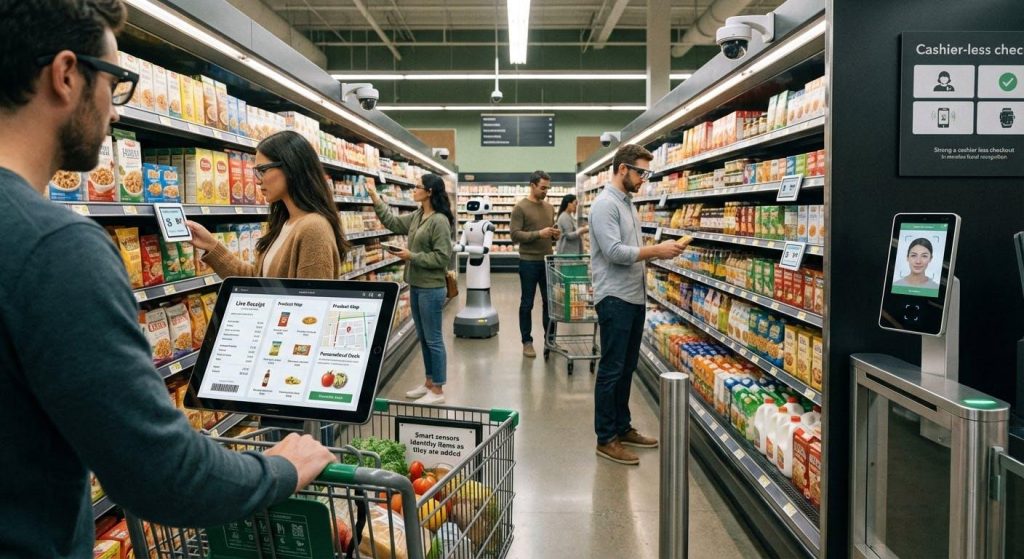
The shift is that grocers are no longer treating that visit as purely transactional. They are trying to turn it into a destination.
For restaurants, that creates both a threat and a useful warning.
The old grocery threat was price. The new threat is convenience with atmosphere.
Restaurants have always competed with “eating at home.” That part is not new.
What is new is that grocery stores are moving aggressively into the middle ground between cooking and dining out.
That middle ground is where a lot of modern food decisions happen.
A customer may not want to spend $80 on a casual dinner for two. They may not want to cook either. They may be tired, price-sensitive, health-conscious, and overstimulated by delivery fees. So they stop at a grocery store with a strong prepared-foods section, grab a hot entrée, a salad, a dessert, maybe a bottle of wine, and feel like they made a responsible decision.
That is not the same as cooking at home. It is not the same as restaurant dining. It is a third behavior.
Operators who ignore this are missing the point.
The restaurant industry keeps fighting over “dine-in vs delivery,” while the customer is often choosing from a broader set of meal solutions: grocery prepared foods, meal kits, premium frozen, club-store family meals, convenience retail, bakery cafés, food halls, and workplace catering.
Your competition is not only the restaurant down the street. It is whatever solves hunger, convenience, budget, mood, and guilt in the same moment.
The consumer is not becoming cheaper. They are becoming more selective.
A lazy read of the market says, “Customers do not want to spend.”
That is not quite right.
Customers are still spending, but they are becoming more ruthless about what feels worth it. Kroger’s June 2026 earnings commentary pointed to rising cost-of-living pressure, more selective purchasing, and greater focus on promotions rather than full-basket shopping.
Restaurants are feeling the same tension.
Menu prices have risen. Labor is expensive. Insurance is up. Food costs remain stubborn. The National Restaurant Association’s 2026 outlook says restaurant employment is projected to reach 15.8 million jobs, while nearly three quarters of operators plan to hire but expect difficulty finding experienced managers and chefs.
That creates a brutal operating reality: restaurants need higher checks, but customers need stronger reasons to justify them.
This is where destination grocery becomes relevant. Grocers are not only selling low prices. They are selling control. The customer can browse, compare, customize, buy one premium item instead of a full restaurant meal, avoid tipping pressure, avoid delivery fees, and still feel like they treated themselves.
That is powerful.
Restaurants cannot win by pretending this behavior does not exist. They have to win by making the restaurant occasion clearer, more valuable, and harder to replace.
Destination grocery is built around “permission.”
A strong grocery experience gives customers permission to spend without feeling irresponsible.
That matters.
A shopper may hesitate to buy a $22 restaurant lunch, but they may buy a $13 prepared bowl, a $5 drink, and a $6 dessert inside a grocery store because it feels practical. It is folded into an errand. It feels less indulgent, even when the total ticket is similar.
This is one of the smartest things grocers understand: context changes perceived value.
Restaurants can learn from this.
Too many operators still frame value as discounting. That is a dangerous habit. Discounting may drive traffic, but it often trains guests to wait for deals and punishes the regulars who were already willing to pay.
Smarter value is about giving customers permission.
That might mean:
A lunch menu that feels fast, complete, and fairly priced.
A dinner-for-two bundle that protects margin through smart item selection.
A family takeout package that removes decision fatigue.
A weekday “early table” offer that fills dead capacity without damaging weekend pricing.
A premium add-on that feels special but is easy for the kitchen to execute.
The move is not “be cheaper.” That is weak strategy unless your whole model is built for volume.
The move is “make the purchase feel easier to justify.”
Grocers are stealing the low-friction meal. Restaurants must protect the high-emotion occasion.
Here is the hard truth: restaurants should not try to win every meal occasion.
A Tuesday night “I just need food” occasion is extremely hard to defend against grocery prepared foods, delivery discounts, and fast casual. You can compete there, but you need operational discipline. If your kitchen is slow, your packaging is sloppy, your delivery menu is bloated, and your margins are thin, you are not building a business—you are subsidizing convenience.
Where restaurants still have an advantage is emotion.
Hospitality. Energy. A room that feels alive. A server who knows the table. A dish that arrives better than expected. A birthday moment. A first date. A regular’s usual drink. A chef special that creates urgency. A neighborhood identity that cannot be duplicated by a grocery chain.
That is what the grocery store is trying to imitate but usually cannot fully own.
The mistake is when restaurants abandon that advantage and become average fulfillment centers.
If your dine-in experience feels forgettable, and your takeout is less convenient than grocery, you are stuck in the worst middle: not emotional enough to be a destination, not efficient enough to be a utility.
That is where restaurants get squeezed.
The prepared-foods aisle is a warning about menu design.
One reason grocery prepared foods work is simplicity.
Customers see the food. They understand it quickly. They can make a decision without reading a long menu, waiting for a server, or gambling on portion size.
Restaurants often make the opposite mistake.
Menus get too large because operators are scared to cut items. Specials get added without removing anything. Delivery menus copy the dine-in menu even when half the food does not travel well. Kitchen teams are forced to execute too many SKUs with too little labor.
That is not hospitality. That is operational clutter.
A restaurant menu in this environment should be sharper, not bigger.
The smarter approach is to identify:
What dishes drive repeat visits?
What travels well?
What has strong contribution margin?
What can be prepped consistently with the labor you actually have?
What creates a signature identity?
What items are there only because the owner is emotionally attached to them?
That last question is where many operators need to be honest. Nostalgia is not strategy. If an item slows the kitchen, confuses the guest, wastes inventory, and rarely sells, it is not “part of the brand.” It is a tax.
Destination grocery works because it edits the decision. Restaurants need the same discipline.
In-store grocery is becoming media. Restaurants should not ignore that.
Another important shift: grocery stores are turning physical locations into marketing channels.
Retail media is moving beyond online ads and loyalty emails. Brands are experimenting with digital screens, QR codes, app offers, and in-store content. Albertsons and Procter & Gamble, for example, have tested short-form entertainment tied to in-store screens, QR codes, loyalty offers, and app engagement.
Restaurants do not need to copy that literally. A neighborhood bistro does not need a scripted mini-series playing in the dining room.
But the principle matters: the physical space itself is media.
Your storefront is media. Your menu is media. Your bathroom wall is media. Your receipt is media. Your staff recommendations are media. Your host stand is media. Your packaging is media. Your table tents, if used tastefully, are media. Your line out the door is media.
Most restaurants underuse the space they already pay for.
A restaurant spending heavily on Instagram ads while doing nothing with its in-store guest journey is making life harder than it needs to be. Social platforms are crowded, expensive, and tiring. Your in-house guests are already acquired. They are already paying attention. They are the easiest people to bring back—if you give them a reason.
That could be a bounce-back offer for slow nights, a QR code to join a real loyalty program, a chef’s note about next week’s limited dish, a private dining card, a catering reminder, or a simple manager touchpoint that turns a transaction into a relationship.
Bad advice: “Post more content.”
Better advice: “Turn today’s guests into next month’s repeat revenue.”
Health, indulgence, and convenience are no longer separate categories.
Grocers are also benefiting from a consumer contradiction: people want to eat better, but they still want pleasure and speed.
FMI-related coverage of grocery shopper priorities notes that shoppers continue to prioritize eating well even as prices rise, while also looking for foods that support health, enjoyment, new flavors, and easier meal preparation.
That contradiction is not a problem. It is the market.
Restaurant operators often split menus too neatly: healthy items here, indulgent items there, convenience over there. But modern diners mix these needs constantly.
They may want a high-protein lunch and fries.
They may want a zero-proof drink and dessert.
They may want a salad that feels abundant, not punitive.
They may want comfort food with better ingredients.
They may want a family meal that feels homemade but saves them 90 minutes.
This is where restaurants can beat grocery when they are thoughtful. Grocery can provide convenience, but restaurants can provide craveability, freshness, customization, and trust.
The opportunity is not to chase every diet trend. That creates menu chaos.
The opportunity is to design dishes that let guests feel good about the decision without removing the joy. Better sides. Smarter portions. Protein-forward options. Sauces that carry identity. Vegetable dishes that are actually cooked with care. Desserts worth sharing. Drinks that make the check grow without making the guest feel exploited.
That is how you serve the contradiction profitably.
The restaurant response: become more intentional, not more desperate.
The worst response to destination grocery is panic.
Do not slash prices because grocery meals feel cheaper. Do not add a retail shelf because you saw another concept do it. Do not launch meal kits unless your team can execute them. Do not build a loyalty program that is just a discount machine. Do not chase every convenience trend while your core guest experience gets weaker.
The better response is to clarify your role in the customer’s life.
Ask four hard questions:
Why should someone come here instead of solving dinner at the grocery store?
Which occasions do we truly own?
Where are we losing guests because we are too slow, too expensive, too inconsistent, or too forgettable?
What can we do that a grocery store cannot do well?
For some restaurants, the answer is atmosphere. For others, it is speed. For others, it is group dining, catering, chef-driven food, local identity, hospitality, late-night energy, or trust with a specific community.
But you need an answer.
“Good food and good service” is not enough. Everybody says that. The market does not reward vague.
The practical playbook for operators
Independent restaurants and multi-location operators should treat destination grocery as a signal, not just a threat.
First, tighten the menu. Cut weak items. Protect speed and consistency. Build around dishes that carry margin and identity.
Second, create clearer occasions. Lunch, date night, family takeout, office catering, weekend brunch, post-work drinks—each occasion needs its own reason to exist.
Third, stop treating takeout as an afterthought. If grocery is winning the convenient dinner, your takeout has to be easy to order, well-packaged, profitable, and designed for travel.
Fourth, use the physical restaurant as a retention engine. Capture emails. Promote bounce-back moments. Train staff to invite repeat visits. Make regulars feel seen.
Fifth, build value without cheapening the brand. Bundles, limited-time menus, smart portions, and premium upgrades usually beat blanket discounts.
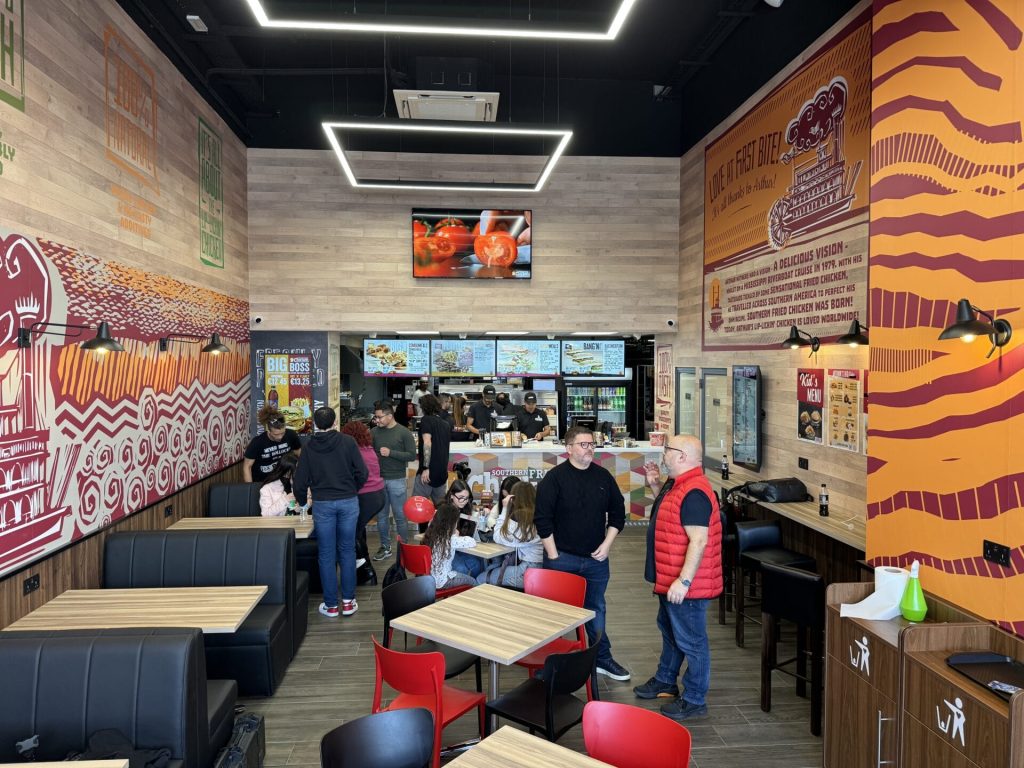
Sixth, make the dine-in experience worth leaving the house for. Lighting, pacing, music, warmth, cleanliness, menu confidence, and manager presence matter more now because the alternative is easier than ever.
None of this is glamorous. That is the point.
The operators who win the next few years will not be the ones chasing every new format. They will be the ones who understand the customer’s real decision: “Is this worth the money, time, effort, and attention?”
The grocery store is becoming a destination because customers want fewer bad trade-offs.
The physical grocery store is not dead because it still fits how people live. It gives them control, convenience, discovery, and value in one trip. As grocers improve prepared foods, loyalty, retail media, health positioning, and in-store experience, they will keep taking more meal occasions from restaurants that are average, unclear, or operationally loose.
But restaurants are not doomed.
They still have the stronger emotional product. They can create memories, rituals, relationships, and cravings in ways grocery stores struggle to match. They can turn a meal into a night out. They can make guests feel hosted, not processed.
The catch is that restaurants have to stop assuming that being a restaurant is enough.
The modern guest has too many alternatives.
So the job is simple, but not easy: make the restaurant occasion sharper, more valuable, more repeatable, and more worth the trip than the convenient option sitting under a heat lamp two aisles away.