

Grocery’s in-store advantage is a warning shot for restaurants: digital convenience matters, but people still buy food with their eyes, hands, instincts, and trust.
Restaurant operators have been told for years that the future is online.
Build the app. Push delivery. Optimize the third-party listing. Get better photos. Capture emails. Run retargeting. Turn the restaurant into a content engine, a fulfillment center, a loyalty database, and a mini media company.
Some of that advice is useful. A lot of it is incomplete.
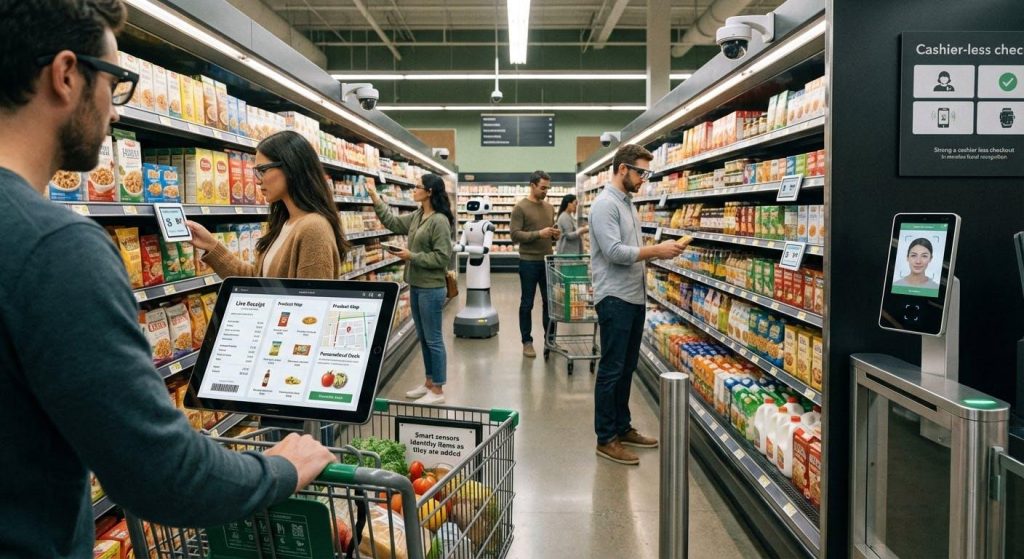
Because while restaurants were being pushed deeper into the digital race, grocery kept proving something uncomfortable: physical food retail is not dead. It is changing, but it still matters. FMI’s U.S. Grocery Shopper Trends 2026 found that 54% of grocery shoppers always shop in-store at their primary store, while 77% are digitally engaged before shopping and 71% use digital tools while shopping. That is not an online-versus-offline story. It is a hybrid behavior story.
And restaurants should pay attention.
Because grocery stores are not just grocery stores anymore. They are competing for breakfast, lunch, dinner, snacks, meal kits, prepared foods, grab-and-go, family meals, and the customer’s definition of “good value.” The customer who hesitates to spend $18 on a casual lunch may still walk into a supermarket, inspect the prepared food case, grab a salad, pick up a rotisserie chicken, and feel like they made the responsible choice.
That does not mean restaurants are losing. But it does mean lazy restaurant thinking is getting punished.
Grocery understands something restaurants sometimes forget: food is sensory
Online ordering is efficient. It is not emotional.
A customer can reorder a burger through an app. They can compare ratings. They can scroll photos. They can check delivery time. But they cannot smell the grill, see the room, watch the bartender move, hear the energy, inspect the plate leaving the pass, or feel whether the place has life.
Grocery’s in-store resilience is built partly on this sensory trust. Shoppers still want to inspect produce. They want to see selection. They want a clean environment. They want reassurance that the food looks fresh, abundant, and worth the money.
Restaurants have the same advantage, but many operators underuse it.
A restaurant’s physical space should make the guest feel three things quickly:
The food is worth paying for.
The operation is clean and controlled.
The people here care.
That sounds basic because it is basic. But basic is where money leaks.
A dirty host stand, dead front window, tired menu board, empty display case, slow greeting, bad lighting, sticky table, confused pickup shelf, or staff member who looks abandoned by management does more damage than another Instagram Reel can fix.
You cannot market your way out of a weak first impression.
The mistake: treating the dining room like a cost center
A lot of restaurants, especially after years of delivery growth, started treating the dining room as secondary. The logic was understandable: labor is expensive, rent is high, customers want convenience, and third-party apps seem to bring demand.
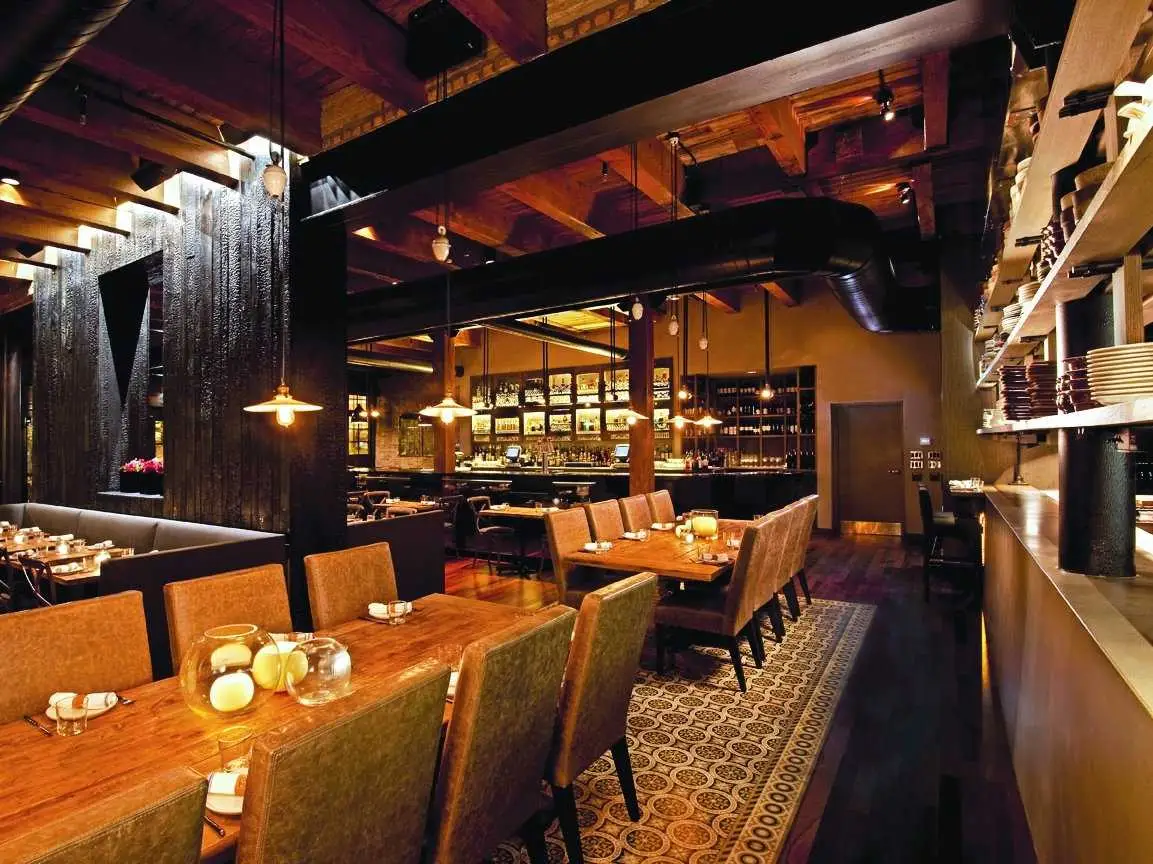
But the dining room is not just seating. It is brand proof.
It is where trust is built. It is where regulars are made. It is where menu items are discovered. It is where high-margin add-ons happen naturally. It is where customers see the value behind the price.
The James Beard Foundation and Deloitte’s 2026 independent restaurant report shows the trap clearly: 40% of operators who implemented online ordering and delivery integration reported lower profits, and restaurants with moderate, intentional tech adoption performed better than those at the low or high extremes. More technology did not automatically mean better economics.
That should wake operators up.
Delivery can grow revenue while quietly weakening the business. The order comes in, but the margin is thin. The guest relationship belongs partly to the platform. The food travels poorly. The customer judges you on a compromised version of your product. Then you pay again to reacquire them.
Smart operators do not reject digital. They force digital to serve the restaurant’s economics.
Bad advice: “You need to be everywhere.”
Better advice: “You need to be profitable where you are discoverable.”
If delivery brings first-time trial, build a path to direct ordering, dine-in visits, catering, private events, subscriptions, or loyalty that actually changes behavior. Otherwise, you are renting attention at a bad margin.
In-store still wins when customers need confidence
Restaurants sell more than food. They sell confidence.
Is this place clean? Is the kitchen serious? Is the staff attentive? Is the food fresh? Is this worth the price? Will I feel stupid bringing someone here?
That confidence is harder to create online.
A five-star review helps. A good website helps. Strong photos help. But the physical experience closes the trust gap.
This is especially important now because customers are more price-aware. In both the U.S. and Europe, diners are not simply “cheap.” They are cautious. They are comparing restaurant meals against grocery prepared foods, home cooking, delivery fees, fast casual, meal deals, and the emotional cost of leaving the house.
When someone chooses to dine in, they are asking for more than calories.
They want a reason.
That reason does not have to be luxury. It can be warmth. Speed. Familiarity. A perfectly run lunch counter. A generous family-style meal. A server who remembers them. A kids’ menu that does not feel like an afterthought. A clean restroom. A room that feels better than eating in the car.
The operator’s job is to make the in-store experience feel intentional enough that the customer stops comparing it to a grocery receipt.
Grocery is becoming a restaurant competitor because it sells value without asking for commitment
Restaurants often think their competition is the place across the street.
That is too narrow.
Your competition is also the supermarket hot bar, the premium sandwich case, the meal kit, the office snack shelf, the bakery counter, the salad bowl chain, the delivery app discount, and the customer’s fridge.
Grocery is dangerous because it offers flexible value. No reservation. No tip anxiety. No long wait. No social pressure. No $70 dinner decision. A shopper can spend $12, $22, or $60 and feel in control.
Restaurants need to respond without racing to the bottom.
The wrong move is endless discounting. Discounting trains customers to wait. It also attracts the least loyal traffic and punishes your regulars if not handled carefully.
The smarter move is structured value.
That might mean a weekday prix fixe that protects margin. A lunch bundle built around contribution profit, not just popularity. A family meal designed for pickup with items that travel well. A “before 6 PM” offer that fills dead capacity. A beverage pairing that lifts check average without overcomplicating service. A loyalty perk that rewards frequency without giving away the most profitable items.
Value is not the same as cheap.
Value means the customer understands why the spend makes sense.
The in-store experience has to reduce friction, not just “feel nice”
Hospitality is not only smiling harder.
For operators dealing with labor pressure, high wages, unpredictable schedules, and retention problems, telling the team to “be more hospitable” is lazy management. The 2026 James Beard Foundation report found that 49% of operators still reported some level of staffing insufficiency, even as shortages improved from the prior year.
So the question is not, “How do we add more service?”
The question is, “Where does the guest experience break, and how do we remove the break?”
Look at your operation like a grocery store would.
Can customers understand the offer quickly?
Can they see what is fresh, popular, seasonal, or high value?
Is pickup obvious, or does it create awkward congestion?
Is the menu trying to sell everything instead of guiding the guest?
Are staff constantly answering questions that signage or menu design should solve?
Does the guest know where to stand, order, wait, pay, refill, or ask for help?
Friction kills repeat visits because customers rarely complain about small confusion. They just choose somewhere easier next time.
A strong in-store experience is not always expensive. Sometimes it is better lighting, tighter menu architecture, clearer pickup flow, cleaner merchandising, a more disciplined greeting, fewer dead zones, and staff trained to guide instead of react.
Digital should amplify the store, not replace it
The grocery lesson is not that online does not matter. FMI’s data shows the opposite: shoppers are heavily digitally engaged before and during the store visit.
That is the real point.
The modern customer moves between channels. They discover online, validate through reviews, check the menu, scan photos, compare prices, visit in person, order later, follow on social, ignore the next five posts, then come back because a specific craving or occasion pulls them in.
Restaurants need to design for that movement.
Your Google Business Profile should make the in-person visit easier: accurate hours, current menu, strong photos, clear parking or entrance notes, updated holiday hours, and review responses that sound human.
Your website should answer practical questions quickly: menu, location, ordering, reservations, private events, catering, dietary notes, and what makes the experience worth leaving the house for.
Your social media should not just chase reach. It should create appetite, familiarity, and proof. Show the room. Show the team. Show the food in context. Show why Tuesday lunch, Friday dinner, Sunday family pickup, or private dining makes sense.
Your email and SMS should not be random blasts. They should move demand into the right slots: slower days, seasonal menus, events, catering windows, high-margin offers, and lapsed regulars.
Digital is not the restaurant. It is the path back to the restaurant.
Cleanliness and human connection are not soft metrics
Operators love numbers they can see: food cost, labor cost, average check, table turns, ad spend, conversion rate.
But some of the most important drivers of revenue are harder to isolate.
Cleanliness. Warmth. Recognition. Energy. Menu confidence. Staff pride. A room that feels alive.
These are not “nice to have” details. They affect whether a guest trusts you enough to return, bring someone, order another drink, try the special, book the private room, or forgive a mistake.
Grocery knows cleanliness and product presentation matter because shoppers make fast judgments in the aisle. Restaurants are no different.
A customer may not say, “I did not return because the counter area looked neglected.”
They will say, “Let’s just go somewhere else.”
That is the brutal part of hospitality. Many losses are silent.
What restaurant operators should actually do now
Do not overreact and turn this into another trend initiative. The answer is not “make the restaurant more experiential” in some vague, consultant-friendly way.
Start with the operating basics that protect trust and margin.
Walk the guest path from the sidewalk to the check. Notice what feels confusing, tired, dirty, slow, or emotionally flat.
Audit your menu for decision fatigue. If everything is treated as equal, nothing is being sold properly.
Make your best-margin items easier to choose. Position them better. Train staff to recommend them naturally. Photograph them well. Build offers around them.
Use delivery as a funnel, not a dependency. Push direct ordering where it makes sense. Protect items that do not travel well. Stop pretending every menu item belongs in a delivery bag.
Design value without panic discounting. Give customers reasons to come at specific times, order specific bundles, and choose you for specific occasions.
And most importantly, treat the physical restaurant as a competitive asset again.
Because in-store grocery still matters for the same reason restaurants still matter: people trust food more when they can experience it.
The restaurants that win will not be the ones that reject technology or worship it. They will be the ones that understand what grocery already knows.
Digital can create convenience.
But the room creates belief.