

Restaurant price growth is cooling in some markets, grocery costs are still unpredictable, and for certain meals, the economics are shifting more than operators realize.
For years, the standard assumption was simple. Eating at home saved money. Restaurants cost more. End of story.
That rule is not as reliable as it used to be.
Not because restaurants suddenly became cheap. They did not. Operators are still dealing with labor pressure, rent, utilities, delivery fees, insurance, and ingredient volatility. In the US, restaurants are still working on thin margins while carrying cost structures that leave very little room for mistakes. The National Restaurant Association says food and labor costs for the average restaurant have each risen 35% over the last five years, while typical pre tax margins remain around 3% to 5%.
But the consumer math has changed in a more interesting way.
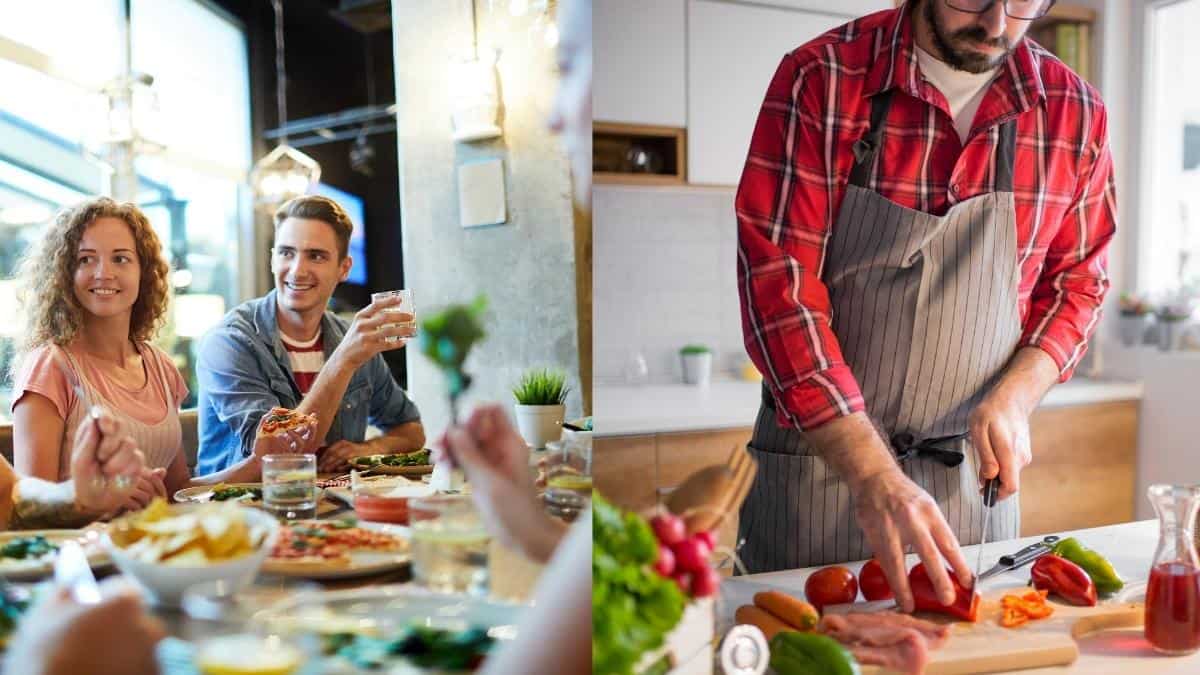
When grocery baskets get hit by uneven inflation, when households waste ingredients they never finish, when a solo diner needs one meal instead of a week of planning, and when restaurants slow their pace of menu price increases, the gap between eating out and cooking at home can narrow fast. In some cases, especially for individuals, couples, lunch occasions, or value driven quick service formats, dining out can feel surprisingly competitive, and sometimes functionally cheaper.
That matters for restaurant operators because it changes how value should be marketed.
The headline is provocative, but the real story is more useful
Let’s be clear. Broadly speaking, restaurant prices have not fallen below grocery prices across the board.
In the US, the latest CPI data still shows food away from home rising 3.9% year over year in February 2026, versus 2.4% for food at home. Full service meal prices were up 4.6%, while limited service meals rose 3.2%.
So if someone is comparing a carefully planned family grocery shop against a premium dinner out, home cooking still usually wins on raw cost.
But that is not how many consumers actually live.
They compare a restaurant meal to the real cost of one meal at home, with all the friction included:
- buying multiple ingredients just to make one dish
- paying for items that come in oversized portions
- throwing away unused produce, herbs, sauces, or dairy
- spending on energy, time, and cleanup
- impulse spending during grocery trips
- paying more for convenience foods that sit between “scratch cooking” and “ready to eat”
That is where the economics start to shift.
Grocery inflation may be slowing, but household food costs are still lumpy and frustrating
Operators need to understand what consumers feel, not just what a top line inflation number says.
USDA’s latest Food Price Outlook says overall food at home prices are expected to rise 2.5% in 2026, with some categories moving much faster. Sugar and sweets are projected to rise 9.8%, beef and veal 5.2%, nonalcoholic beverages 3.4%, and fresh vegetables also remain volatile.
That matters because consumers do not buy “the average grocery basket.” They buy specific meals. If the meal they want depends on beef, produce, sauces, drinks, and fresh add ons, the real cost of cooking that meal at home may be higher than they expected, especially when part of the basket goes unused.
Europe is seeing a similar pattern. Euro area inflation overall was 1.9% in February 2026, but food categories have remained sticky, and food, alcohol, and tobacco inflation was expected at 2.4% in March 2026 even before looking at local market differences.
Consumers notice this at shelf level. They may not say, “food inflation is structurally uneven.” They say, “every time I try to make one decent meal, the shop costs more than I expected.”
That feeling creates opportunity.
The real comparison is no longer restaurant versus home. It is restaurant versus waste, hassle, and low yield cooking
This is the part too many restaurant marketing teams miss.
A household of four batch cooking efficiently is one thing. A single professional buying ingredients for a Tuesday dinner is something else entirely.
If that person needs chicken, lettuce, a sauce, bread, a side, and a drink, the purchase often forces them into a larger basket than the one meal requires. If they use half the ingredients and throw the rest away later, the cost of that “cheap home cooked dinner” looks very different.
Restaurants should pay attention to this because value messaging has been too narrow. Too much of the industry still frames value as discounting. That is lazy.
Value also includes:
- portion certainty
- no waste
- speed
- consistency
- convenience
- a complete meal at a known price
- not having to think about what to do with leftover ingredients
For many customers, especially urban customers, office workers, older consumers, and smaller households, that is not a minor point. It is the point.
A €14 lunch special or a $16 bundled dinner can look rational when the home alternative involves a €22 or $25 grocery spend spread across ingredients they did not really want to buy in the first place.
This is one reason quick service and fast casual have a sharper value story than many full service brands
Not every restaurant benefits equally from this shift.
The formats most likely to win are the ones that make the comparison easy:
- a clear bundled price
- obvious portion value
- easy takeout
- reliable speed
- familiar meals people might otherwise try to make at home
That is why limited service operators often have an opening here. The US data already shows limited service menu inflation running below full service.
A well built limited service offer can do something powerful. It can sit in the consumer’s mind not as a treat, but as a practical alternative to home preparation.
That is a stronger position than “cheap food.” It says, “You are not overpaying for convenience. You are buying a better equation.”
For full service, the story is different. The opportunity is not to pretend a sit down experience beats home cooking on price. It usually does not. The opportunity is to package specific occasions where the comparison is closer than people assume:
- weekday prix fixe menus
- lunch sets
- neighborhood early evening menus
- wine and small plate bundles
- family style takeout packages with strong per person math
Those offers can work when they are engineered for margin, not when they are rushed out as blunt discounts.
The smart operator does not scream “cheaper than cooking.” They prove better value than the customer expected
Do not make the amateur mistake here.
If you market this idea badly, it sounds desperate or dishonest. Many consumers know a three course dinner out is not cheaper than a disciplined grocery plan. If you overstate the claim, you lose credibility.
The stronger move is subtler and more believable.
Show the guest the complete equation:
- a fixed price
- what is included
- how many people it serves
- how fast it is
- how little effort it requires
- why it beats the cost and mess of buying the same meal piecemeal
For example:
- “Dinner for two, mains, sides, and dessert, ready in 20 minutes”
- “Office lunch under $15 with drink included”
- “Family pasta night, feeds four, less than buying the ingredients separately”
- “Midweek set menu priced below a typical supermarket meal basket for two”
The claim needs to be grounded in a real use case. Not a slogan.
This is also why operators should stop copying generic discount culture
There is a bad habit across hospitality right now. Operators feel pressure from social media fatigue, rising ad costs, and softer traffic, so they default to loud promotions. Ten percent off. Twenty percent off. App only flash offers. Endless codes.
That is usually weak strategy.
Customers are not just looking for lower prices. They are looking for fewer bad decisions. A restaurant that helps them avoid wasted groceries, uncertain prep, delivery platform markups, and last minute stress is solving a more valuable problem than a restaurant that simply knocks a few points off the bill.
That is especially relevant in Europe and the UK, where hospitality businesses are still dealing with heavy wage and occupancy pressure while consumers remain highly price sensitive. A recent industry survey cited by UKHospitality found that one in five UK hospitality businesses fear collapse within the next year under current cost pressures.
In that environment, operators cannot afford promotions that create noise without payoff. They need offers that feel commercially intelligent.
What restaurant owners should do with this shift
If you run an independent restaurant or a multi unit group, this is the opportunity:
1. Audit which menu items already compete well with home cooking
Look for dishes with simple ingredient comparisons, low waste perception, and clear bundle logic. Bowls, pasta, rotisserie, sandwiches, curries, lunch plates, and family meals often perform well here.
2. Build complete meal value, not random discounts
A guest compares the total solution, not the entrée in isolation. Include sides, drinks, or dessert where the margin structure allows it and the offer feels finished.
3. Segment by household reality
A solo lunch buyer, a couple on a Tuesday night, and a family of five do not think about value the same way. Stop marketing one offer to all of them.
4. Use pricing language carefully
“Good value” is credible. “Cheaper than home cooking” needs proof. Use it only when the math is genuinely defensible in a specific occasion.
5. Train managers to measure perception, not just redemptions
Did guests trade up to the bundle. Did the offer improve frequency. Did it bring back lapsed customers. Did it increase direct orders. Did it hold margin better than a straight discount.
That is the level of analysis this market requires.
The bigger lesson for operators
The market is not telling restaurants that cheap wins.
It is telling them that clear value wins.
Consumers in the US and Europe are still cautious. They are juggling food inflation, rent, energy, delivery fatigue, and subscription overload. They are not making dining decisions in a vacuum. They are comparing effort, waste, speed, certainty, and emotional energy just as much as they are comparing menu prices.
That gives restaurants a real opening, but only if they are disciplined enough to use it well.
Closing takeaway
Dining out is not universally cheaper than cooking at home. That is too blunt, and serious operators should not build strategy on sloppy claims.
But the old assumption that home cooking is always the obvious value choice is weaker than it used to be. Grocery volatility, household waste, smaller household sizes, convenience expectations, and a slower pace of restaurant price increases in some segments have changed the comparison.
The restaurants that benefit will not be the ones yelling about discounts. They will be the ones that understand how modern consumers actually calculate value, then build offers that make the decision feel easy, sensible, and worth repeating.