

For restaurants, digital ordering can drive demand, extend reach, and lift sales. It can also quietly destroy margin, weaken customer ownership, and train guests to buy through the wrong channel.
There was a time when online food ordering and delivery platforms felt like an add on. A nice extra. Something mostly for chains, urban operators, or late night brands.
That era is over.
Online ordering is now part of the basic restaurant operating model across the US and Europe. Guests expect it. Convenience is built into how people choose where to eat. In the US, off premises dining is now described by the National Restaurant Association as essential for both consumers and operators.
But this is where too many operators get the story wrong.
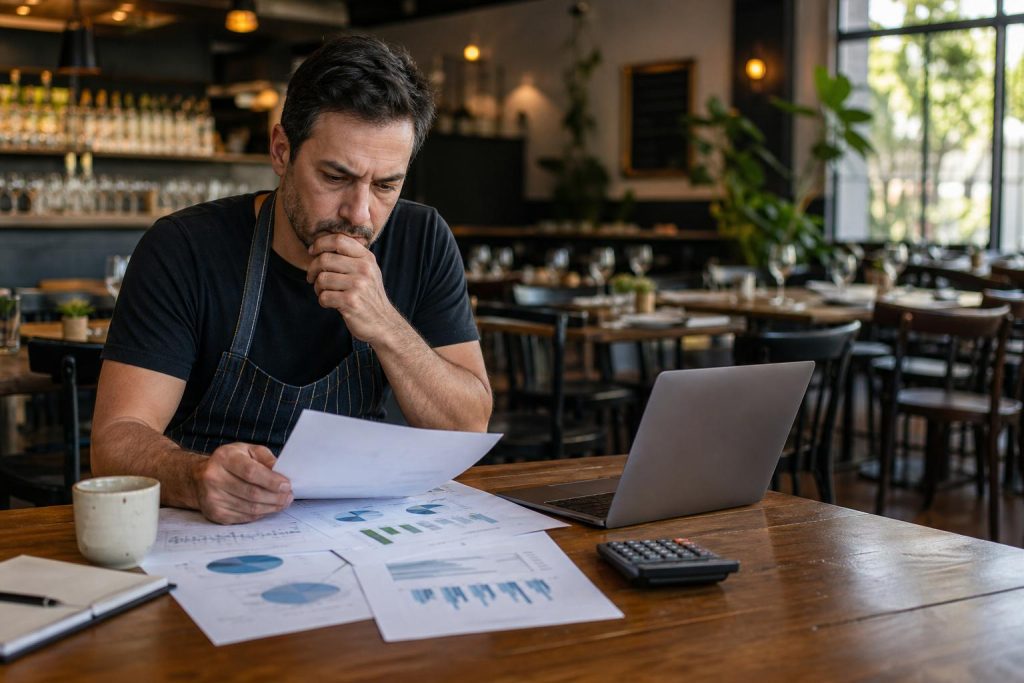
They treat online ordering and delivery platforms as growth tools first, when in reality they are channel economics problems first. That distinction matters. A platform can absolutely bring in volume. It can also take a painful share of every order, weaken your direct customer relationship, pressure your kitchen during peak periods, and leave you with activity that looks healthy on paper but does not improve the business.
If you run a restaurant today, the question is not whether online ordering matters. It does. The real question is whether your digital ordering setup is helping you build a stronger business or making you more dependent on expensive demand you do not control.
The convenience economy is real, and restaurants cannot ignore it
Operators who still dismiss online ordering as a trend are behind.
Consumer behavior has shifted. In a 2026 restaurant survey, 33% of respondents said they prefer placing an order through a restaurant’s app, while low delivery fees ranked as the most important platform feature for 35% of respondents. Work was the top reason many people ordered takeout or delivery.
That is not just a tech story. It is a lifestyle story.
People are tired. Schedules are fractured. Dual income households, solo diners, remote workers, parents managing family logistics, and younger guests who are used to frictionless purchasing all push demand toward digital convenience. In Europe, the pattern is similar, though local adoption varies by market, city density, and labor economics.
This means restaurants need a serious online ordering strategy. Not because digital is trendy, but because customer expectations have moved. A restaurant with poor ordering UX, inconsistent delivery execution, or weak digital visibility can now lose business before the guest ever considers the menu.
That part is obvious.
The harder truth is that digital convenience has also become one of the easiest ways for restaurants to sabotage their own margins.
The platform trap is simple: restaurants gain access, then lose control
Third party delivery platforms solved a real problem. They aggregated demand, normalized discovery, and made delivery operationally accessible for thousands of operators that never could have built the infrastructure themselves.
That is the good part.
The bad part is the economics.
A 2025 industry summary from Deliverect reported that 72% of restaurants identified high commission fees as their biggest challenge with delivery platforms, with fees often ranging from 15% to 35% per order.
That is not a small detail. That is the model.
When labor is tight, food costs are still elevated, packaging costs are not trivial, and occupancy costs keep rising, a channel that strips away that much margin cannot be treated casually. In the UK, those broader pressures are still intense enough that recent hospitality sector warnings suggest many businesses expect cost increases to trigger further job cuts and viability concerns.
So yes, platforms can increase order volume. But if the contribution margin is weak, if the order would have come through a direct channel anyway, or if the guest never becomes yours, the volume may be commercially hollow.
This is where operators need discipline.
An online ordering and delivery platform is not automatically a growth engine. Sometimes it is just outsourced dependency with better branding.
Discovery is valuable, but ownership is where the money is
The smartest restaurants now treat third party platforms as customer acquisition channels, not as the center of the business.
That is the right way to think.
Platforms are useful for:
- reaching new guests in competitive trade areas
- capturing convenience driven demand
- showing up in search behavior tied to delivery intent
- generating incremental volume in underutilized dayparts
- supporting categories that travel well
What they are bad at is helping you build a durable customer asset.
The platform owns the environment. The platform shapes the comparison set. The platform pressures pricing visibility. The platform often weakens brand distinction. And unless you are actively creating a bridge out of that ecosystem, the guest can keep ordering from you for months without really becoming your customer in any meaningful sense.
That is a serious strategic problem in a world where customer acquisition costs are high, social reach is inconsistent, and repeat business matters more than ever.
A restaurant that gets ten orders through a platform is not necessarily building ten customer relationships. It may just be renting ten transactions.
Those are not the same thing.
Direct ordering is where stronger operators are separating themselves
Restaurants that actually understand channel strategy are investing harder in direct digital ordering.
Not because direct is fashionable, but because the economics are better and the customer relationship is real.
If one third of surveyed consumers already prefer ordering through a restaurant’s own app, that should get operators’ attention. That preference gives restaurants a real opening, but only if the direct experience is fast, trustworthy, and worth using.
That means direct ordering has to be more than a buried button on a bad website.
It needs:
- mobile first design
- clean menu structure
- fast checkout
- accurate timing
- visible pickup and delivery options
- sensible fees
- loyalty integration
- post order remarketing through SMS or email
- an offer that gives guests a reason to choose direct next time
This is where weak operators make a bad mistake. They put their best promotions on third party platforms because they want volume. That is upside down.
Your best economics should usually sit inside your direct channel. Not recklessly, not with blanket discounts, but with smarter value. Better bundles. Faster pickup. Loyalty rewards. Bounce back incentives. Exclusive menu items. Family meal pricing. Priority ordering windows.
The goal is not to abandon platforms. The goal is to stop feeding them better than you feed your own business.
Not every restaurant should play the delivery game the same way
This is another area where generic advice falls apart.
A burger concept, a pizza brand, a salad chain, and an upscale bistro should not treat online ordering and delivery as the same business problem. Travel quality, speed expectations, packaging needs, and ticket structure all change the equation.
A restaurant whose food deteriorates quickly in transit may need to keep delivery tightly controlled or limited to specific items. A concept with naturally high portability may be able to scale digital demand more aggressively. A premium brand may need to protect perception by making pickup stronger than marketplace delivery. A multi location operator may prioritize digital ordering for throughput and customer data, while an independent neighborhood restaurant may use it primarily to defend local convenience demand.
This is why the operator mindset has to shift from “Should we be on delivery apps?” to more serious questions:
- Which menu items are actually delivery safe
- Which channel produces the healthiest margin
- Which dayparts justify delivery demand
- Which fees are commercially tolerable
- Which guests should be pushed toward direct ordering after first purchase
- Which orders are incremental, and which are just cannibalized
Online ordering is not one decision. It is a set of channel decisions.
Treating it like a binary yes or no question is amateur thinking.
The operational side matters more than most marketing teams admit
A lot of online ordering advice is written as if fulfillment is a minor detail.
It is not.
Digital demand can wreck an operation if the system behind it is weak. Restaurants do not get paid for having a pretty ordering interface if the kitchen gets crushed, tickets stack badly, handoff breaks down, and the guest gets cold food or the wrong order.
In practice, this is where digital profitability is won or lost:
- menu engineering for travel
- throttling capacity during peak periods
- realistic prep times
- packaging that protects product quality
- clear pickup shelves or dispatch areas
- tighter handoff between front of house and kitchen
- order accuracy discipline
- platform menu syncing and inventory control
This is not glamorous work, but it is the difference between digital growth and digital chaos.
Many operators chase more online demand before fixing the underlying execution. That is backward. If the order experience is unreliable, all you are doing is scaling disappointment.
Delivery platforms are not just marketing tools, they are negotiation environments
Operators also need to stop behaving passively with platforms.
Too many restaurants sign up, absorb the fee structure, accept weak visibility, and then complain privately while continuing to give away margin. That is not strategy.
You need to know:
- what your effective commission rate is after promotions and service mix
- whether platform discounts are being subsidized by you, the platform, or both
- which menu categories absorb the economics well and which do not
- whether your marketplace pricing reflects the cost to serve
- whether you are getting incremental customers or just diverted direct demand
- how refunds, cancellations, and inaccuracies affect the true channel margin
If you are not measuring that, you are not managing the channel. You are just participating in it.
And participation alone is not enough anymore.
What smart restaurants are doing now
The stronger operators in this space are not trying to “win delivery” in some broad, dramatic way. They are making more disciplined choices.
They are:
- using third party platforms for reach, not dependence
- building direct ordering into the center of the customer journey
- engineering menus specifically for travel quality and margin
- using loyalty and CRM to move one time digital buyers into repeat direct customers
- protecting direct channels with better bundles and better economics
- restricting low margin digital items instead of offering everything
- measuring channel profitability at the item, daypart, and customer level
That is what serious digital strategy looks like in restaurants now.
Not more apps. Not more noise. Better channel control.
Closing takeaway
Online food ordering and delivery platforms are now part of the restaurant business whether operators like it or not. Consumer behavior has already settled that argument.
But convenience does not erase economics.
For restaurants in the US and Europe, the real issue is not whether digital ordering drives demand. It does. The real issue is whether that demand comes through a channel that leaves enough margin, enough customer ownership, and enough operational control to make the business stronger.
That is the standard restaurants should care about.
If your online ordering and delivery platform strategy increases orders but weakens profit, hides the customer, and overloads the operation, it is not a growth strategy. It is a modern version of the same old mistake, chasing revenue that looks good before you count what it actually costs.